Australia Rolling Red Fines – The introduction of $415 rolling-red fines starting 1 December marks a major shift in how road safety enforcement is handled across Australia. With advanced AI-powered red-light cameras being deployed nationwide, Australian drivers are now under stricter monitoring to reduce risky behaviour at busy intersections. These new automated systems are designed to catch vehicles that enter intersections after the light has turned red, even by a split second. This article explains how these AI red-light cameras work, what Australian motorists need to know, and why the government believes this upgrade will significantly improve road safety outcomes across the country.
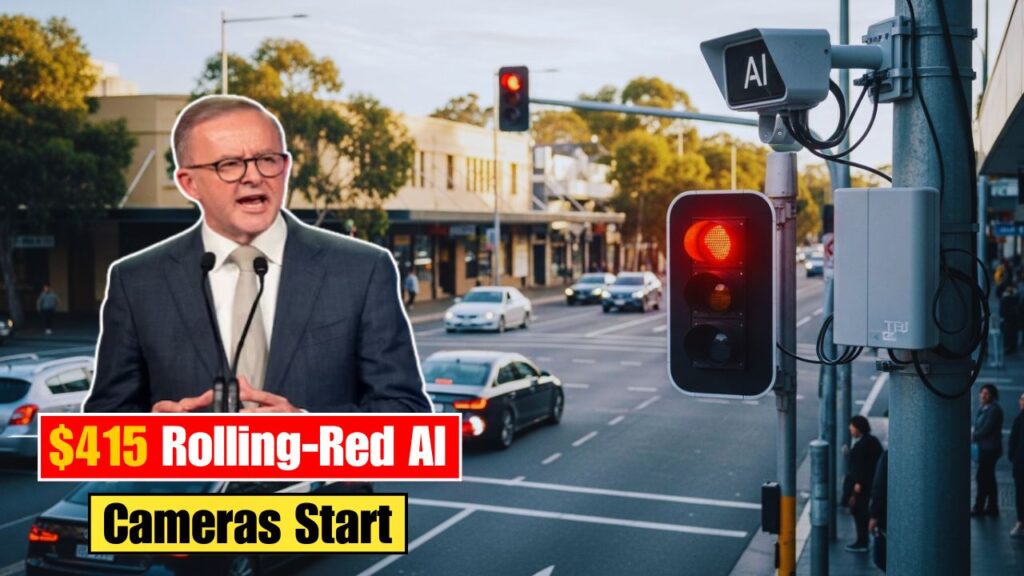
AI red-light enforcement for Australian drivers
The Australian authorities have introduced AI red-light enforcement systems to ensure faster and more accurate detection of rolling-red offences. These new cameras use advanced machine-learning models to identify the exact moment a vehicle crosses the stop line after the signal changes to red. For Australian drivers, this means the margin of error has reduced significantly compared to older camera systems. The government argues that these enhanced technologies will help lower intersection crashes, which remain one of the most common causes of urban road injuries. By automating violation detection, Australia aims to maintain consistent monitoring and encourage drivers to slow down when approaching intersections.

Automated rolling-red fines for citizens across Australia
From 1 December, drivers across Australia will face $415 rolling-red fines detected through fully automated systems. This upgrade focuses on preventing last-second acceleration through amber lights, a behaviour that often leads to dangerous collisions. The updated AI cameras are not influenced by weather, lighting, or driver speed, ensuring a reliable and fair enforcement process. Australian citizens should be aware that these systems also store high-clarity evidence, including number plate recognition and motion tracking. Authorities believe that this level of accuracy will reduce disputes and encourage more responsible driving habits, especially in high-risk urban areas where red-light running incidents are common.
| Rule/Update | Details |
|---|---|
| Fine Amount | $415 per rolling-red offence |
| Start Date | 1 December 2025 |
| Technology Used | AI-powered red-light detection |
| Applies To | All states and territories in Australia |
| Main Purpose | Reduce intersection crashes |
Smart camera monitoring for motorists throughout the Australian nation
These new AI-enhanced smart cameras will operate continuously across the Australian nation, capturing violations with pinpoint precision. The technology monitors vehicle movement using predictive tracking, allowing it to determine whether a driver intentionally pushed through a late amber signal or mistakenly crossed after the change. Motorists should expect improved accuracy in violation recordings and faster issuing of notices. The goal is not only enforcement but behaviour change, as consistent automated monitoring typically results in fewer repeat offences. As these systems expand nationwide, road safety experts predict a noticeable decline in intersection-related injuries and fatalities.
AI safety technology for road users in Australia
The expansion of road-safety AI technology across Australia highlights the government’s commitment to reducing preventable accidents. These systems compile real-time data to help authorities identify dangerous intersections and adjust traffic signals accordingly. By analysing patterns such as late braking, heavy traffic flow, and seasonal high-risk periods, AI plays a significant role in shaping smarter infrastructure decisions. For road users, this means safer roads, more predictable intersection behaviour, and fewer chances of high-impact collisions. The long-term vision is to create an automated, data-driven safety network that protects all Australian road users.
Frequently Asked Questions (FAQs)

1. When do the new $415 rolling-red fines start?
The new fines officially begin on 1 December 2025.
2. How do AI red-light cameras detect violations?
They use motion tracking and machine learning to identify vehicles entering the intersection after the light turns red.
3. Will all Australian states use these AI cameras?
Yes, the rollout applies to all states and territories across Australia.
4. Can drivers challenge fines issued by AI cameras?
Yes, drivers can dispute fines, and high-quality evidence will be reviewed by authorities.