Australia Introduces Rolling-Red Camera Fines – Australia has introduced a new $415 rolling-red camera fine system powered by advanced AI enforcement technology. These updated traffic rules aim to improve intersection safety by identifying motorists who enter intersections after the light has turned red, even if they continue moving without a full stop. The new rules apply across major Australian states, and drivers are being warned to stay alert as enforcement becomes stricter. This article explains how the new rolling-red system works, why AI monitoring is being expanded, and what Australian motorists should know to avoid unexpected penalties under the updated regulations.
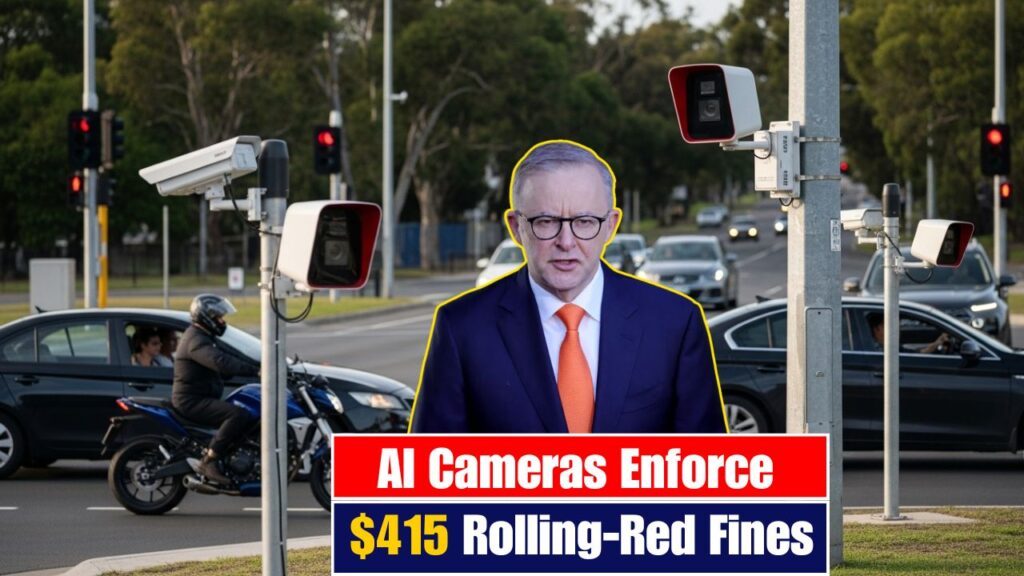
AI Rolling-Red Enforcement for Australian Motorists
The new AI-driven rolling-red enforcement system targets Australian motorists who fail to stop properly at intersections when the signal transitions to red. Authorities across Australia have implemented this upgraded technology to reduce side-impact crashes and improve road discipline in busy city zones. The AI system reviews vehicle speed, stopping distance, and intersection entry timing, making it harder for drivers to avoid penalties. With the $415 fine now standard for rolling-red violations, Australians are being urged to understand the rule clearly and adapt their driving habits. The focus is on deterrence, accuracy, and promoting safer behaviour at key junctions where accident risks are historically higher.

Rolling-Red Camera Penalties for Drivers Across Australia
Drivers across Australia will now face stricter rolling-red penalties as AI-equipped cameras become more widespread at intersections. These cameras evaluate whether a vehicle has entered the intersection unlawfully after the light has turned red, even if the driver believes they crossed during amber. This system is designed to eliminate ambiguity and ensure consistent enforcement. For Australian drivers, the $415 fine serves as a strong reminder to stop fully before the line when lights change. Authorities emphasise that the goal is not revenue collection but improved road safety, as rolling-red behaviour has been linked to dangerous collisions.
| Rule/Area | Details |
|---|---|
| Fine Amount | $415 for rolling-red violation |
| Technology Used | AI-enabled intersection cameras |
| Target Behaviour | Entering intersection after red without stopping |
| Coverage | Major states and cities across Australia |
| Safety Goal | Reduce crashes and improve intersection discipline |
AI-Powered Traffic Compliance for Australians Nationwide
Australians nationwide will experience enhanced traffic compliance systems as AI tools expand across intersections. These technologies not only detect rolling-red violations but also help authorities analyse peak-hour risks, reaction times, and lane-based movement patterns. With the introduction of the $415 penalty, the national focus is shifting toward proactive prevention rather than traditional police-led monitoring. Australians are encouraged to adjust their driving habits early, as the AI system leaves little room for error or misjudgment. The broader objective is to build safer intersections, reduce emergency response cases, and support long-term road-safety strategy across the country.
Smart Intersection Safety Enhancements for Australian Drivers
Australian drivers can expect ongoing improvements in smart intersection safety as AI-enhanced monitoring becomes more accurate and responsive. These systems track vehicle movement with precision, helping authorities understand how drivers behave during high-risk signal changes. By strengthening compliance with stopping rules, the technology aims to reduce T-bone collisions and protect pedestrians. As more AI cameras are deployed, drivers across the nation should remain attentive near intersections and understand that even slight rolling-red movements may trigger penalties. This shift represents Australia’s commitment to lowering intersection crash rates through advanced digital enforcement.
Frequently Asked Questions (FAQs)

1. What is a rolling-red camera fine in Australia?
It is a $415 penalty issued when a vehicle enters an intersection after the light has turned red without a complete stop.
2. How does the AI enforcement system detect violations?
The AI system analyses stopping distance, timing, and vehicle movement through intersection sensors and cameras.
3. Are rolling-red cameras active in all Australian states?
Most major Australian states have already activated them, with more intersections being added gradually.
4. Can motorists challenge a rolling-red fine?
Yes, drivers can dispute the fine if they believe the camera incorrectly identified the violation.