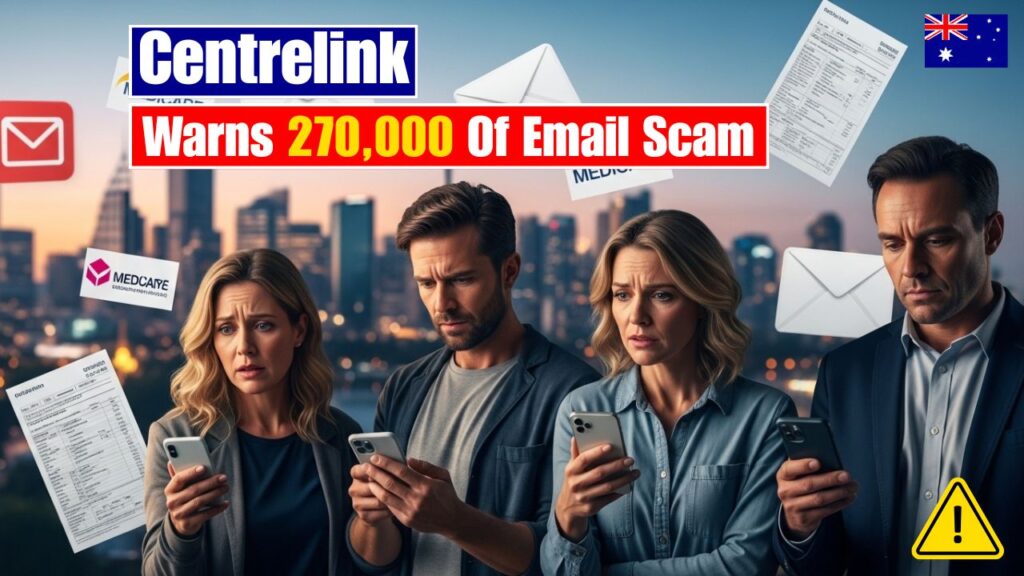
Centrelink Issues Urgent Warning – The Australian government has issued an urgent nationwide alert after a growing number of citizens reported receiving fake emails impersonating Centrelink, Medicare, and even the Australian Taxation Office. According to official estimates, more than 270,000 Australians have already been targeted by this sophisticated scam, which attempts to steal personal details, banking information, and MyGov login credentials. This article explains the full warning issued by Centrelink, how the scam works, and what steps residents across Australia must take to stay protected in 2025.
Centrelink Scam Warning for Australian Citizens
Centrelink has confirmed that scammers are now using highly convincing emails that mimic government branding to deceive Australian citizens into clicking malicious links. These emails often claim that a payment needs verification, that a benefit is suspended, or that Medicare and tax details must be updated immediately. Once clicked, the link redirects the user to a fake MyGov login page designed to steal credentials. Authorities advise Australians to avoid opening suspicious attachments and to never provide personal information through email links. Instead, users should always log in directly through the official MyGov website, ensuring their details remain protected.
Fake Centrelink Emails Targeting Residents Across Australia
Reports show that scammers have expanded their tactics, targeting residents across Australia with emails pretending to be from multiple government departments at once. These messages frequently reference Medicare refunds, ATO tax updates, and Superannuation alerts to create urgency. Many victims have reported that the emails appeared legitimate due to authentic-looking logos, sender names, and formatting. The government warns that no official Australian department will ever request banking updates or password confirmations through email. Verifying messages through official portals or phone lines remains the safest way to prevent financial loss or identity theft.
| Scam Element | Description |
|---|---|
| Fake Sender Email | Uses MyGov, Centrelink, Medicare, or ATO-style addresses to appear official. |
| Urgent Message | Claims your payment is paused, tax refund pending, or Medicare details outdated. |
| Malicious Link | Redirects users to a cloned MyGov login page that steals credentials. |
| Requested Data | Asks for bank account details, Super info, or Medicare numbers. |
| Government Advice | Never click links — always sign in through the official MyGov portal. |
Email Fraud Threat Expands for Australians in 2025
The threat of email fraud in 2025 has grown rapidly, with Australians facing a surge in scams impersonating multiple agencies at once. Cybersecurity experts warn that criminals are using AI-generated messages, real payment figures, and cloned templates to trick even tech-savvy individuals. This makes it important for every Australian, especially seniors and benefit recipients, to double-check suspicious notifications. Centrelink urges all MyGov users to enable two-factor authentication, review recent activity, and immediately report any unfamiliar changes. Staying informed about emerging fraud trends is essential to safeguarding personal identity and financial security.
Government Fraud Alerts for the Australian Community
Government fraud alerts now play a crucial role in educating the Australian community about evolving online scams. Officials regularly publish updates on the MyGov and Services Australia websites to help individuals recognise fake email patterns. These alerts also guide the public on how to report scam attempts, secure compromised accounts, and identify unsafe links. As digital fraud grows more advanced each year, Australians are encouraged to follow verified channels and remain cautious when receiving unsolicited communication from organisations claiming to provide benefits, refunds, or tax updates.
Frequently Asked Questions (FAQs)

1. How do I know an email from Centrelink is fake?
A fake email usually contains urgent demands, suspicious links, or requests for banking or login details.
2. Does Centrelink ever ask for information through email?
No, Centrelink never asks for banking or personal details via email links or attachments.
3. What should I do if I clicked a scam link?
You should reset your MyGov password immediately and report the incident to Services Australia.
4. How many Australians have been affected by this scam?
More than 270,000 Australians have already been targeted by this sophisticated email scam.